Ōgami Island--an island of the great deity, floating beyond the sea--is not a landscape that wholly discloses itself to the gaze. Bound to its utaki sacred sites are prayers, silences safeguarded by the island's people, and an awe that precedes language. This work does not seek to describe the island's visible form or to make its sacredness manifest. Rather, it remains at the threshold of what must not be seen, receiving the subtle presence suspended between sea and sky. UPAMAZUMA(Island of Worship) approaches Ōgami Island as an island of ugami--prayer offered to the benevolent deities of the heavens--and as a place prior to prayer's assuming visible form. Here, silence is not a void, but a deep stratum that sustains time, memory, taboo, and the relation between human beings and the natural world. What emerges upon the painted surface is not the island in its entirety, but a faint reverberation from a sacred realm that permits response only from afar
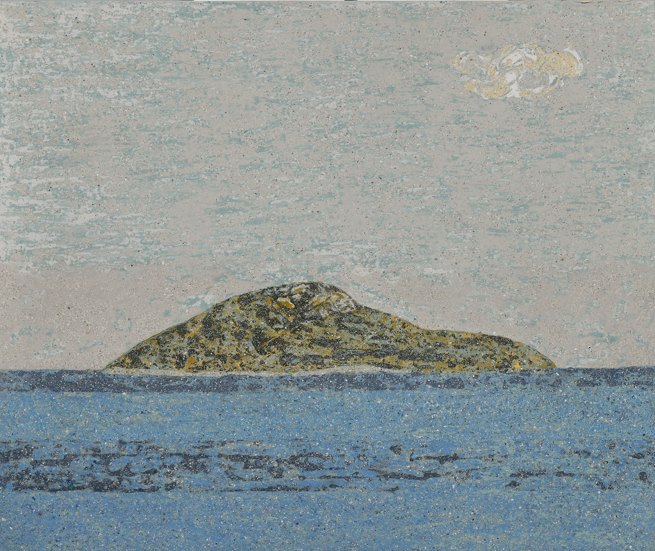
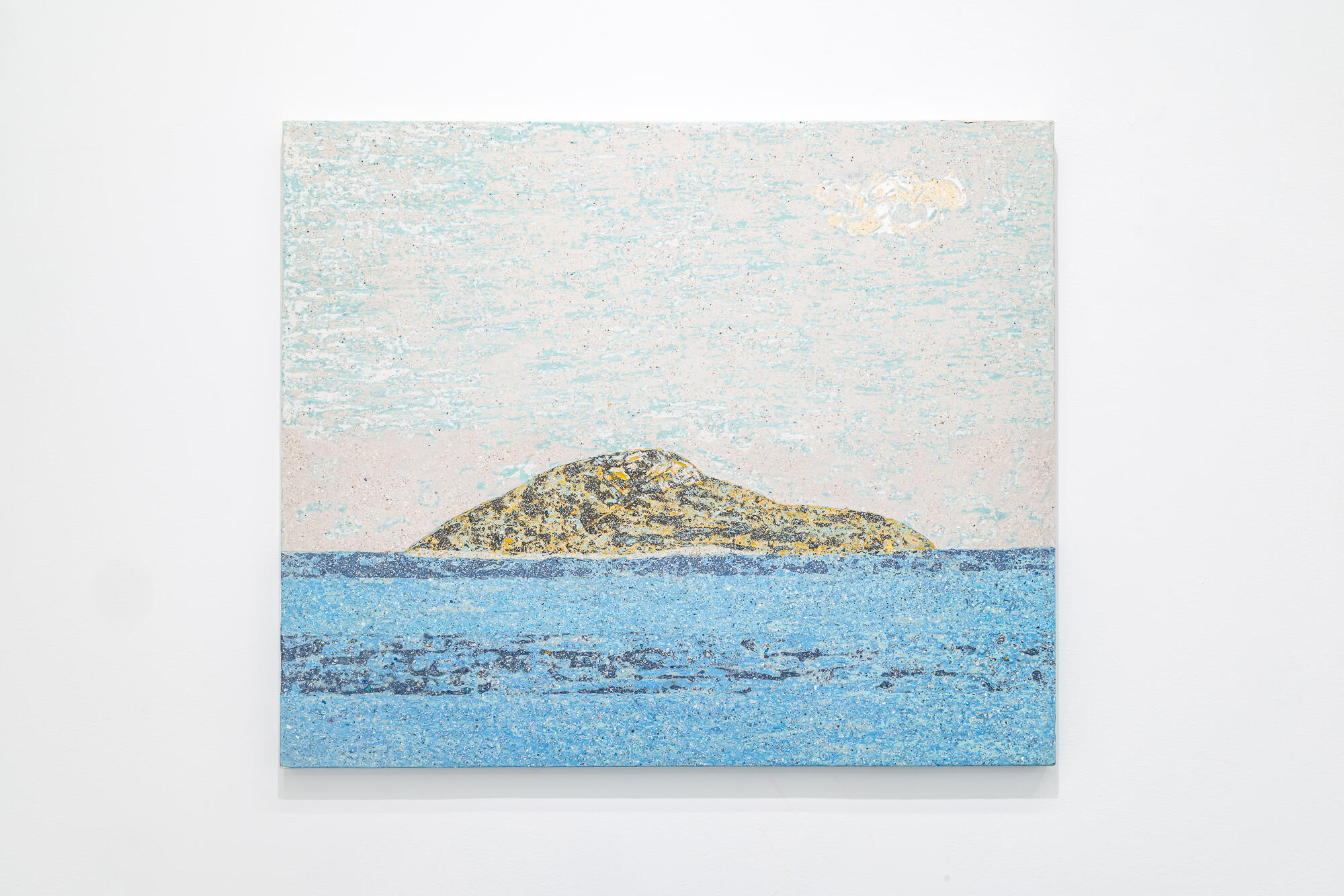
海の彼方に浮かぶ大神(大いなる神の)島は、見る者にすべてを開示する風 景ではない。そこには、御嶽に結ばれた祈り、島人によって守られてきた沈 黙、そして言葉以前の畏れが息づいている。 本作は、島の姿を描写し、聖性 を可視化しようとするものではない。むしろ、見えてはならないものの手前 に立ち、海と空の狭間の気配を受け取る。 ウパマズマ(island of worship) は、「拝み(諸天善神への祈り)の島」として、祈りが形をもつ以前の場所 として捉える。沈黙は空白ではなく、時間、記憶、禁忌、そして自然との関 係を保つ深層となる。画面に現れるものは島の全容ではない。それは、遠く からのみ応答を許す聖域の、かすかな残響である。
Ōgami Island--an island of the great deity, floating beyond the sea--is not a landscape that wholly discloses itself to the gaze. Bound to its utaki sacred sites are prayers, silences safeguarded by the island's people, and an awe that precedes language. This work does not seek to describe the island's visible form or to make its sacredness manifest. Rather, it remains at the threshold of what must not be seen, receiving the subtle presence suspended between sea and sky. UPAMAZUMA(Island of Worship) approaches Ōgami Island as an island of ugami--prayer offered to the benevolent deities of the heavens--and as a place prior to prayer's assuming visible form. Here, silence is not a void, but a deep stratum that sustains time, memory, taboo, and the relation between human beings and the natural world. What emerges upon the painted surface is not the island in its entirety, but a faint reverberation from a sacred realm that permits response only from afar